
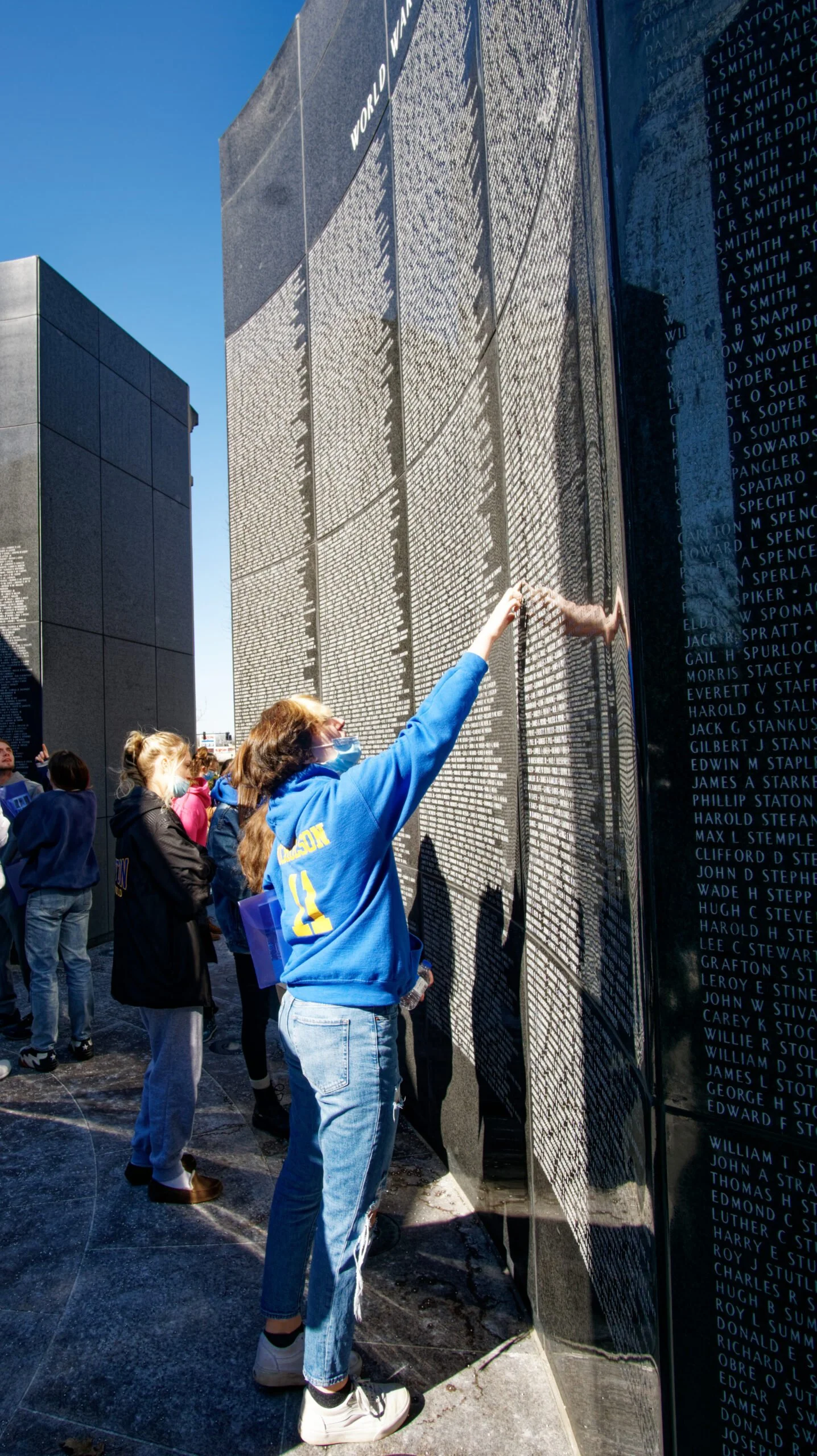
ABOUT THE WEST VIRGINIA NATIONAL CEMETERIES PROJECT

In 2021, the West Virginia Humanities Council obtained funding through the VA’s Veterans Legacy Program (VLP) to pilot a new initiative honoring the service of men and women interred in Grafton and Pruntytown: the West Virginia National Cemeteries Project. Since then, the project has continued to grow and evolve through funding from the VLM’s successor, the Veterans Legacy Grant Program (VLGP).
Each year West Virginia high school students,* assisted by graduate-level researchers from West Virginia University’s Public History program, work in small groups for several months to research and write biographies of individual veterans. The biographies available on this page are the result of their hard work.
Using newspapers, yearbooks, obituaries, census records, city directories, archival records, and sometimes even letters or interviews with family members, the students sought to vividly memorialize the lives and service of their veterans. In the eyes of the project, every veteran’s experience is considered equally valuable. There is no requirement for length of service; a veteran need not have seen combat or served during a conflict. The only prerequisite is interment at one of West Virginia’s two national cemeteries.
Beginning in 2025—the project’s fifth year—research and writing have expanded to include the Donel C. Kinnard Memorial State Veterans Cemetery in Dunbar (Kanawha County).
The Humanities Council is proud to salute America’s veterans through the West Virginia National Cemeteries Project, and continues to be honored by the assistance and/or partnership of the Taylor County Historical and Genealogical Society, Grafton High School, West Virginia University, West Virginia Archives and History, as well as many supportive members of the public. We hope to nurture and expand the project for many years to come.
*Students have participated thus far from Grafton High School (Taylor County), University High School (Monongalia County), and Robert C. Byrd High School (Harrison County).
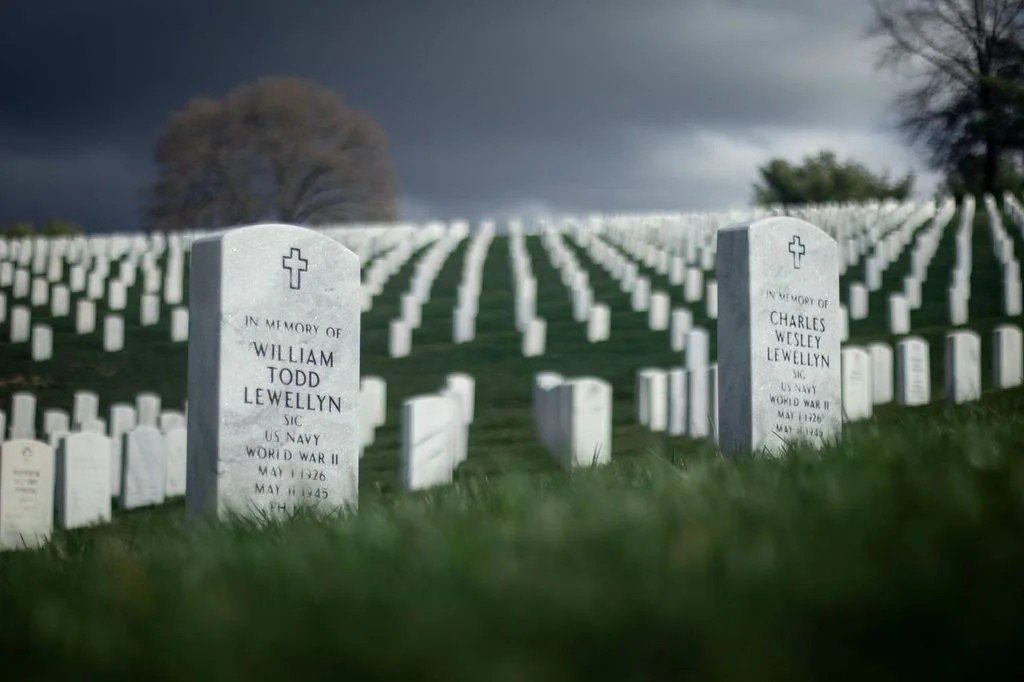
ABOUT THE CEMETERIES
In the aftermath of the American Civil War (1861-1865), that bloody conflict’s unprecedented number of casualties required a new vision for how American veterans would be honored and buried. Efforts by Congress and the U.S. military soon gave rise to a system of “national cemeteries.”
There are now 155 such cemeteries spanning the country, staffed by the National Cemetery Administration (NCA), a division of the U.S. Department of Veterans Affairs (VA). In 1867, Grafton National Cemetery in Taylor County, West Virginia, was among the first wave of these new institutions (only four years after the birth of West Virginia). Nearly three decades after Grafton National Cemetery ran out of space during the Vietnam War, the newer West Virginia National Cemetery opened four miles away from Grafton in Pruntytown. Interments began in 1987, and both cemeteries are administered by the same NCA staff. These are West Virginia’s only national cemeteries.
The third and final project-eligible cemetery in the Mountain State, Donel C. Kinnard Memorial State Veterans Cemetery in Dunbar, Kanawha County, is named in honor of Vietnam veteran and Navy Hospital Corpsman Senior Chief Donel C. Kinnard. The facility opened in 2012, and is intended to serve the residents of West Virginia’s central and southern counties more conveniently.
“Hallowed Ground,” The Broad Side, West Virginia Humanities Council publication